
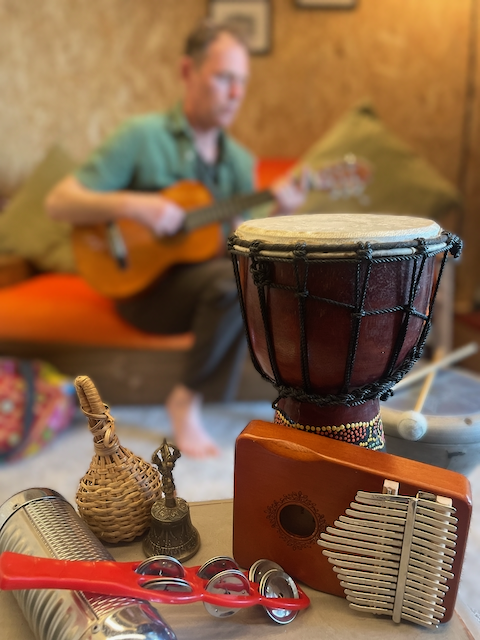
Music therapy is a powerful and creative form of support that uses music to help people connect, express themselves, and grow. Whether in one-to-one sessions or in small groups, it can benefit people of all ages, especially those facing emotional, social, or mental health challenges.
You don’t need any musical background or skill to take part—just come as you are. In music therapy, there’s no pressure to “perform” or “get it right.” Music therapy is about exploring sounds feelings, and connection in a space that’s safe, welcoming, and free of judgement.
For individuals on the autistic spectrum, music can offer a unique way to communicate beyond words; a bridge that doesn’t rely on typical social expectations, but instead honours each person’s natural rhythm and way of being. When words aren’t the easiest form of expression, music can speak volumes.
Music therapy can be especially valuable for those who feel isolated or find communication difficult. It opens up new pathways for connection, making space to share and appreciate the joy of creating something together.
Sessions might include making music with instruments, using your voice, improvising, or even writing songs together. Sometimes its as simple as a few shared notes; other times, it becomes a rich, expressive journey. At its heart, music therapy is about the relationship between therapist and client, a relationship built on trust, kindness, and genuine acceptance.
Everything takes place in a confidential, supportive setting where each person is valued exactly as they are without judgment or expectation. Grounded in person-centred values and the social model of disability, our approach to music therapy nurtures personal growth, emotional wellbeing, and the freedom to be truly seen and heard.
For more information, or to arrange a meeting, please contact me.
 Cloud7 Therapy